Nine warning signs your water heater is failing
Most water heaters give some notice before they quit. Here are nine things to listen, look and smell for.
October 27, 2026 · 4 min read
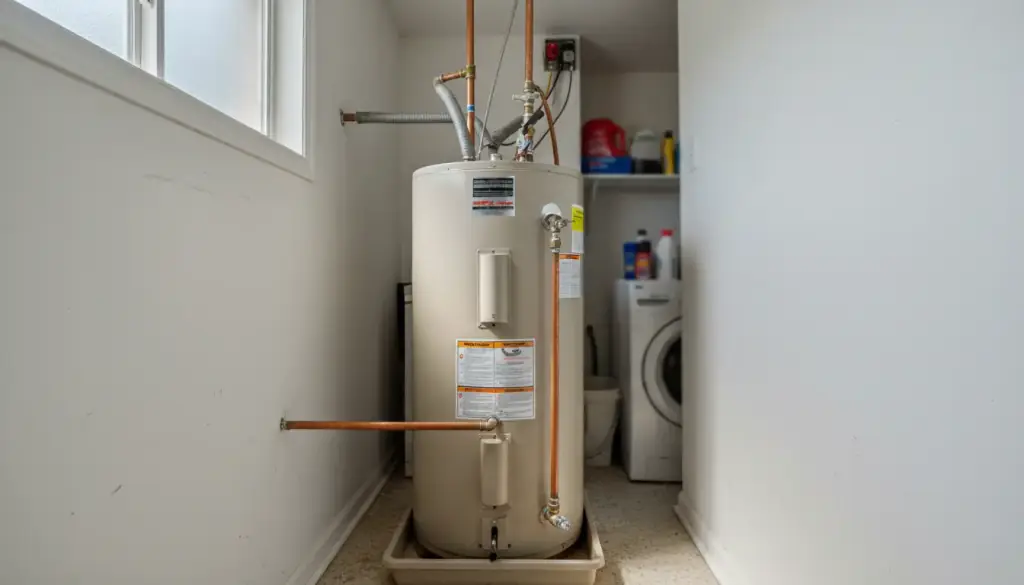
A water heater sits in a closet or garage doing its job for years, and most people only think about it when the shower runs cold. The good news is that these units usually give you some notice before they fail completely. Catching the early signs can mean the difference between a repair and a flooded utility room.
Here are the nine warning signs we tell Grandview-area customers to watch for, followed by how to think about repairing versus replacing.
The nine signs
- Odd noises. Pops, bangs, hisses or a steady hum that wasn't there before mean something inside the unit has changed.
- A weird smell. A musty or sulfur-like odor from the hot water can point to a problem in the tank. If you ever smell gas near a gas-fired unit, leave the house and call your gas utility or emergency services before anything else.
- The sound of water running. If you hear water moving when every tap and appliance is off, there may be a leak somewhere in the system.
- Condensation. Moisture beading on the tank or the pipes around it is worth a look, since it can hint at a slow leak or a problem with the unit.
- Soft flooring underneath. Floor that feels spongy, bubbled or stained around the base of the heater is a classic sign that water has been escaping for a while.
- Water that isn't heating. If the water stays lukewarm or runs cold, the heating components or controls may be failing.
- Low water pressure. Weak hot water flow, when cold water is fine, can mean the heater or its connections are clogged up.
- Rust on the unit. Rust on the tank, fittings or the water itself suggests corrosion has started somewhere it shouldn't.
- Rock noises in the unit. A rumbling or crackling sound, like small stones tumbling in the tank, is usually sediment that has built up and hardened at the bottom.
Why sediment makes so much noise
Water carries minerals, and over time some of them settle out as sediment at the bottom of the tank. On a tank-style heater, that layer sits between the burner or element and the water you're trying to heat. As the heater runs, trapped water under the sediment boils and bubbles up through it, which is where the popping and rumbling comes from.
That layer makes the unit work harder to do the same job, and it can shorten the life of the tank. If the noise is the only symptom, it's often a maintenance conversation. If it comes with other signs on the list, it's a bigger one.
Which signs can't wait
Not every sign is equally urgent. Water on the floor, soft flooring under the unit, rust in your hot water and the sound of running water are the ones we'd call about quickly, because leaks do damage while you wait. A gas smell is an immediate safety issue, as noted above. A slightly noisy tank that still heats is something you can plan around.
If the unit is leaking from the tank itself, a repair usually isn't on the table, since a tank that has corroded through can't be patched back to health. Leaks at a fitting or connection are a different story and are often fixable.
Repair or replace
This is the question every customer asks, and the honest answer is that it depends on what's wrong. A few things push the decision one way or the other:
- What failed. A worn heating component or a faulty control is generally a repair. A corroded tank is generally a replacement.
- How old the unit is. The older the heater, the less sense it makes to put money into it.
- How many repairs it has already needed. One repair is a repair. A string of them is a pattern.
- Whether the problem will come back. Heavy sediment and rust tell you something about the tank's future.
Our master plumber looks at the unit and gives you a straight recommendation. Sometimes that's a repair, and we'll tell you so. We give free estimates, and the right call is the one that keeps you from paying twice.
Brands we work with
We repair and replace water heaters in AO Smith, Rheem and Navien Tankless. Tank units store hot water and keep it ready. Tankless units heat water as you use it, so there's no storage tank to corrode through, although they have their own parts that need attention. Which style fits depends on your household, your space and the lines already in place, and that's worth talking through before the old unit comes out.
Our commercial customers have water heaters too, and we handle those along with boiler repairs and replacements. Our water heaters page has the full list.
What to do today
Walk over to your water heater. Look at the base for water or stains, check the tank and fittings for rust, and listen for a minute. If you find even one item from the list above, take a photo and write down what you heard or noticed. That helps whoever comes out to find the cause faster.
If something looks off, call or text (817) 648-9946. We're open Monday to Friday, 7:30 am to 5:00 pm, and 24-hour emergency service is available if water is already where it shouldn't be. First-time clients get 10% off service calls, labor and materials.
Lonestar Plumbing & Backhoe Service, (817) 648-9946
Call (817) 648-9946More articles
Why we dig to a broken sewer line instead of jackhammering your slab
A broken sewer line doesn't always mean a torn-up floor, and the first tool we reach for isn't a jackhammer.
What sewer hydrojetting does, and why we assess the roots first
High-pressure water can restore a sewer line without chemicals, but only after someone has checked the pipe can take it.