What a plumbing video inspection shows you
A camera in the pipe turns a guess into a picture, and the picture decides what happens next.
October 27, 2026 · 4 min read
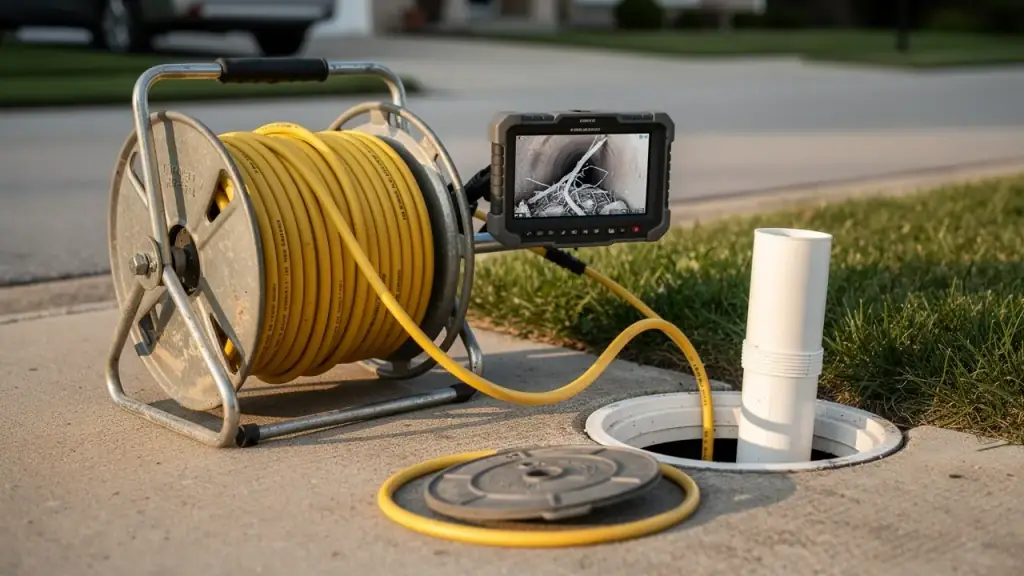
Underground pipes are out of sight, which is exactly why they cause so much argument. The drain is slow, the yard is wet, the tub gurgles, and everyone has a theory. A plumbing video inspection ends the guessing by sending a camera into the line to see what's there.
What the equipment is
A video inspection uses a fiber optic cable topped with a high-resolution camera. The cable feeds into an underground sewer line or other pipe, usually through a cleanout or another access point, and the camera sends a live picture to a monitor. The crew watches the inside of the pipe as the camera moves along it.
Because the cable is flexible, it can follow the line through bends and joints. Because the camera has its own light, you can see detail in a pipe that has never seen daylight.
What it can find
On our service page we describe video inspection as a way to diagnose clogs, leaks, drips, low pressure and water running. In practice, the footage can show things like these:
- A blockage, and what it's made of: grease, debris, scale or roots.
- Roots that have entered through a joint or a crack.
- Cracks and breaks in the pipe wall.
- Joints that have separated or shifted out of line.
- A low spot where the pipe has sagged and holds standing water.
- Buildup on the walls that narrows the pipe and cuts into flow.
- Signs of a leak, where water is getting in or out of the line.
Low water pressure and a sound of water running can have causes that aren't visible from the outside. A camera lets the crew rule things in or out instead of working through a list of maybes at your expense.
Why it saves digging
The old way to find a sewer problem was to open the ground where you thought it might be. If you guessed wrong, you opened it again. A camera tells you where to dig, or that you don't need to dig at all.
That's central to how we work. When a sewer line is broken, we repair it with tunneling and excavation rather than jackhammer services, and the camera is what makes that precise. The footage shows the break, the crew measures along the line, and the trench goes to the right spot. Fewer surprises, a smaller hole, and less of your yard and floor affected.
Many sewer cameras can also be tracked from above ground with a locator, which helps mark where the camera is at the moment you see a defect on screen. Ask whoever inspects your line how they'll show you the position of what they find.
When a video inspection makes sense
- A drain that keeps clogging after it has been cleared.
- Several fixtures backing up at the same time.
- A wet or soft patch in the yard with no obvious source.
- Hot or cold water pressure that has dropped for no reason you can find.
- Before any excavation, so the dig goes where it needs to.
- After a hydrojetting job, to see what the clean pipe looks like.
- When you're sizing up an older property and want to know the condition of the sewer line.
That last one is a general point rather than something specific to our customers. A line you can't see is a line you can't judge, and a few minutes of footage tells you more than a seller's assurance.
What a camera can't do
It's worth being straight about the limits. The camera shows what it can reach. A severely collapsed section or a heavy blockage can stop it, and then the crew has to clear or open the line before the rest can be seen. It also doesn't repair anything. It tells you what the problem is, and then somebody still has to fix it.
And the picture needs interpretation. A pipe with some surface wear can look dramatic on a monitor and still be fine, while a hairline problem can matter a lot. That's why it helps to have the master plumber watching the footage with you and explaining what each thing means for your line.
What happens after the footage
Once the line has been seen, the next step usually falls into one of three buckets. The pipe is fine and the problem is somewhere else. The pipe is dirty or rooted and needs cleaning, which is where sewer hydrojetting comes in, with the master plumber assessing root damage first. Or the pipe has failed in one spot or along a stretch, and it needs repair by excavation.
In all three cases, you know more than you did when you called. We give free estimates, and we'll show you what the camera found before anyone talks about the work.
Lonestar Plumbing & Backhoe Service has served the Grandview, TX area for over 40 years, and there is always a licensed plumber on every job. To talk about a video inspection, call or text (817) 648-9946, Monday to Friday, 7:30 am to 5:00 pm. Our plumbing video inspection page has more on the service.
Lonestar Plumbing & Backhoe Service, (817) 648-9946
Call (817) 648-9946More articles
Why we dig to a broken sewer line instead of jackhammering your slab
A broken sewer line doesn't always mean a torn-up floor, and the first tool we reach for isn't a jackhammer.
Nine warning signs your water heater is failing
Most water heaters give some notice before they quit. Here are nine things to listen, look and smell for.